
Celebrating the Unseen: How Small Acts of Courage Shape Your Healing Journey
In this inspiring episode of Mamahood After Trauma, host Emily honors the quiet courage of mothers healing from trauma. As the podcast approaches its 200th episode, Emily emphasizes the power of "showing up"—the small, unseen acts of resilience that drive true healing.
She encourages listeners to celebrate their progress, no matter how invisible, and invites them to download the free "Unlocking Peace Guide" for support.
The episode serves as a heartfelt reminder that every step forward matters, and that together, mothers are rewriting the narrative of healing with strength and hope.

Table of Contents
Introduction and Resource Reminder (00:00:00) Emily welcomes listeners, introduces the podcast, and reminds them to download the free "Unlocking Peace Guide."
The Quiet Power of Showing Up (00:01:51) Emily discusses the unseen acts of courage in healing, like managing triggers and believing in the possibility of peace.
Honoring Progress and Upcoming Milestone (00:04:19) Emily encourages listeners to celebrate their progress and previews the upcoming 200th episode celebration.
Closing Remarks and Encouragement (00:05:47) Speaker 2 thanks listeners, encourages them to use the resource, and offers words of support and solidarity.
The Quiet Power of Showing Up: Small Acts of Courage on the Healing Journey
Welcome to the Motherhood After Trauma community! As we approach the 200th episode milestone, host Emily invites us to pause and reflect on a theme that often goes unnoticed but is at the very heart of healing: the quiet, persistent act of showing up. In this episode, Emily honors the unseen strength of mothers who continue their healing journey, not through grand gestures, but through small, everyday acts of courage.
This blog post dives deep into the main theme of the episode—the quiet power of showing up—and unpacks actionable strategies for mothers navigating healing after trauma. Whether you’re a longtime listener or new to the podcast, you’ll find expert insights, practical tips, and encouragement to help you reclaim peace and break cycles, one gentle step at a time.
Redefining Healing: Beyond the Highlight Reel
In a world obsessed with visible progress—public wins, social media highlights, and dramatic breakthroughs—it’s easy to overlook the real work of healing. Emily reminds us that true growth is often invisible. It’s not about the moments that get applause, but about the quiet decisions you make when no one is watching.
Key Insight:
Healing is not linear, and it rarely looks like the highlight reels we see online. Instead, it’s a series of small, intentional choices that add up over time.
The Power of Small, Unseen Acts
Emily highlights that the bravest people are not always the loudest. The mothers who keep going, who build safety and awareness in their homes, and who refuse to give up on themselves—these are the true heroes of the healing journey.
Examples of Small Acts of Courage:
- Tuning in to a podcast episode, even when you’re exhausted.
- Choosing to breathe through a trigger instead of reacting.
- Apologizing after losing your cool and trying again the next day.
- Allowing yourself to believe, even briefly, that peace is possible.
Expert Advice:
Don’t underestimate the power of these small acts. Over time, they create a foundation of resilience and hope.
Actionable Tips for Showing Up on Your Healing Journey
Let’s break down each tip Emily shares, with in-depth guidance and actionable steps you can take today.
1. Commit to Consistency, Even When It’s Quiet
What It Means:
Showing up consistently—whether it’s listening to a podcast, journaling, or practicing self-care—builds momentum. Even if progress feels slow or invisible, consistency is key.
How to Practice:
- Set a Gentle Routine: Choose a small, manageable action (like listening to an episode or taking five minutes to breathe) and commit to it regularly.
- Track Your Progress: Use a journal or app to note each time you show up for yourself. Celebrate these moments, no matter how small.
- Give Yourself Grace: Some days will be harder than others. Consistency is about returning, not perfection.
Expert Insight:
Consistency rewires your brain for safety and trust. Over time, these small acts accumulate, creating lasting change.
2. Manage Triggers with Compassion
What It Means:
Triggers are inevitable on the healing journey. The goal isn’t to eliminate them, but to respond with compassion rather than reactivity.
How to Practice:
- Pause and Breathe: When triggered, take a deep breath. This simple act can interrupt the cycle of reactivity.
- Name the Trigger: Acknowledge what’s happening (“I’m feeling triggered right now”) without judgment.
- Use Grounding Techniques: Try grounding exercises like the 5-4-3-2-1 method (naming five things you see, four you feel, etc.) to anchor yourself in the present.
- Seek Support: Reach out to a trusted friend, therapist, or community (like the Motherhood After Trauma podcast) for encouragement.
Expert Insight:
Managing triggers is a skill that improves with practice. Each time you respond with compassion, you reinforce your capacity for self-regulation.
3. Practice Repair: Apologize and Try Again
What It Means:
No one is perfect. There will be moments when you lose your cool or fall short of your intentions. The power lies in your willingness to repair and try again.
How to Practice:
- Apologize Sincerely: If you react in a way you regret, offer a genuine apology to your child or loved one.
- Model Growth: Show your children that making mistakes is part of being human, and that repair is possible.
- Reflect and Adjust: After a rupture, reflect on what triggered you and how you might respond differently next time.
Expert Insight:
Repairing after a rupture is one of the most powerful ways to build trust and model resilience for your children.
4. Cultivate the Belief That Peace Is Possible
What It Means:
Even if it’s just for a moment, allow yourself to believe that healing and peace are possible for you.
How to Practice:
- Affirmations: Use gentle affirmations like, “Peace is possible for me,” or “I am worthy of healing.”
- Visualize Calm: Spend a few moments each day visualizing what peace would feel like in your body and home.
- Celebrate Small Wins: Each time you experience a moment of calm, acknowledge it as evidence that peace is within reach.
Expert Insight:
Belief is a powerful motivator. Even fleeting moments of hope can fuel your journey and help you keep going.
Honoring the Quiet Revolution: Breaking Cycles in Silence
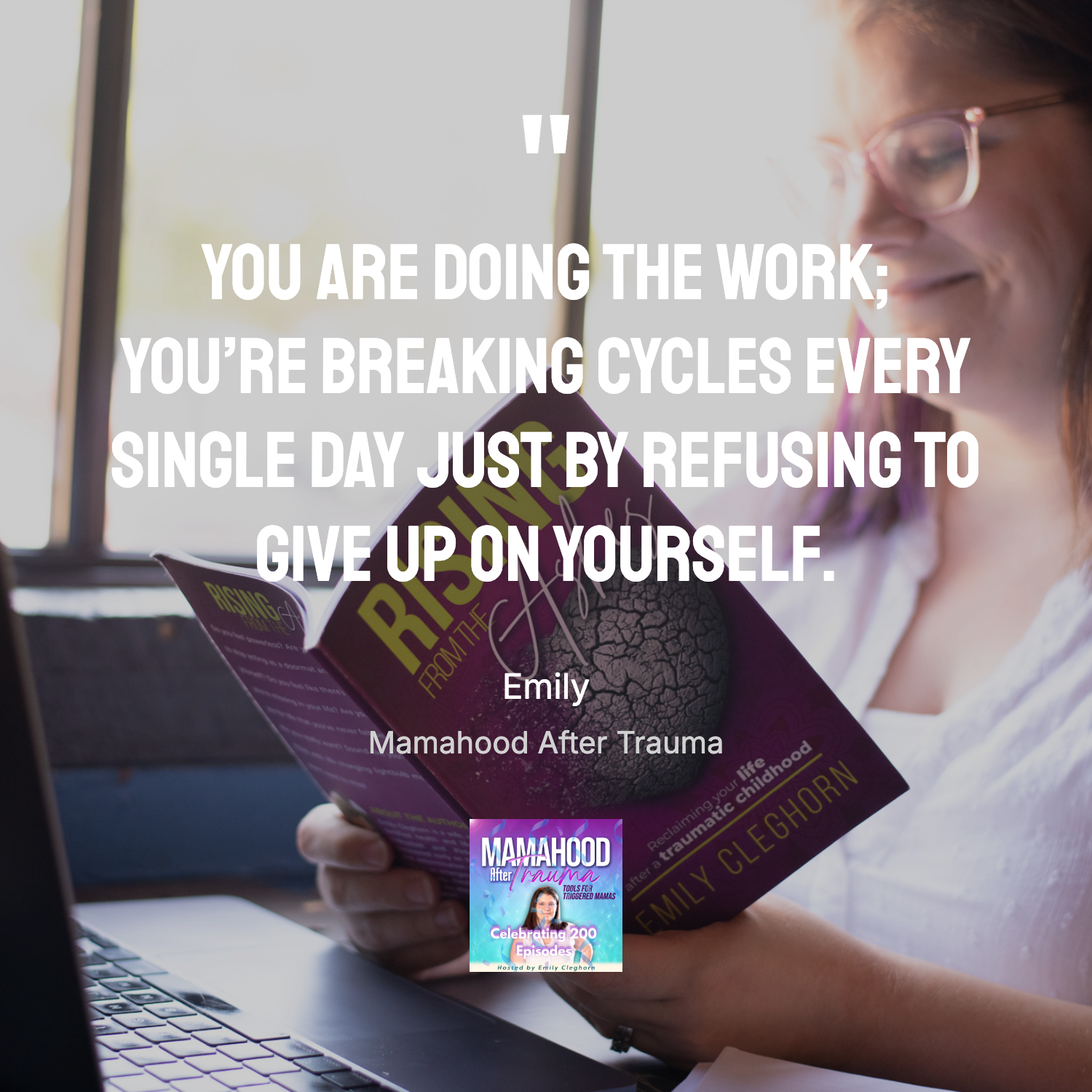
Emily’s message is clear: You are breaking cycles every single day just by refusing to give up on yourself. The quiet work you do—often unseen and uncelebrated—is the foundation of generational healing.
How to Honor Your Journey:
- Pause and Reflect: Take time to acknowledge your progress, no matter how small.
- Connect with Community: Remember, you are part of a larger movement of mothers rewriting what healing looks like.
- Share Your Story: Even if it’s just with one trusted person, sharing your journey can be deeply validating.
Celebrating Progress: The Importance of Pausing and Reflecting
As the podcast approaches its 200th episode, Emily invites listeners to pause and honor how far they’ve come. This act of reflection is vital for sustaining motivation and recognizing your own strength.
Action Steps:
- Take a Deep Breath: Inhale strength, exhale self-doubt.
- Celebrate Milestones: Mark your progress—whether it’s a week of consistent self-care or a single moment of peace.
- Express Gratitude: Thank yourself for every act of courage, no matter how quiet.
Unlocking Peace: A Free Resource for Your Journey
To support your healing, Emily offers the Unlocking Peace Guide—a free resource designed to help you manage triggers and reclaim your sense of calm.
What’s Inside the Guide:
- Practical tools for managing emotional triggers
- Step-by-step exercises to create calm
- Affirmations and grounding techniques
How to Access:
Download the Unlocking Peace Guide here.
Final Thoughts: You Are Not Alone
Healing after trauma is a journey made up of countless small, courageous acts. If you’re quietly showing up—listening, learning, trying again—you are the heartbeat of this community. You are not alone.
As we celebrate 200 episodes of truth-telling, healing, and hope, remember: You are part of a quiet revolution. Keep showing up, keep believing, and know that peace is possible for you
About Emily Cleghorn

Emily Cleghorn is an award-winning Holistic Trigger Recovery Coach, bestselling author, podcaster, and sought-after speaker on a mission to help trauma-surviving mamas heal while parenting. Through her signature Mended Mama Method, Emily empowers moms to navigate triggers and tantrums with confidence, breaking free from reactive patterns and creating a peaceful, connected home.
Driven by her passion for creating positive generational change, Emily shares her powerful story of overcoming the grip of childhood trauma to inspire others that healing is possible — even in the chaos of motherhood. Her work has touched countless lives, giving mamas the tools and hope to reclaim their peace and raise emotionally healthy kids.
Want to be a guest on Mamahood After Trauma? Send Emily Cleghorn a message on PodMatch, here