
The Shame Game: How to Stop Playing and Start Healing
In this inspiring episode of "Mamahood After Trauma," host Emily welcomes healing expert Emma Lyons, who shares her journey from law to trauma recovery.
Emma discusses the pervasive role of shame in Western culture and its impact on trauma survivors, particularly those from dysfunctional families.
She introduces her BREAK method—Break the trance, Refuse to engage, Expose the lie, Anchor in your truth, and Kick it out—to help listeners reclaim their power from internalized shame.
Emma’s insights offer practical, empowering steps for mothers seeking to heal and break free from cycles of self-sabotage and inherited pain.
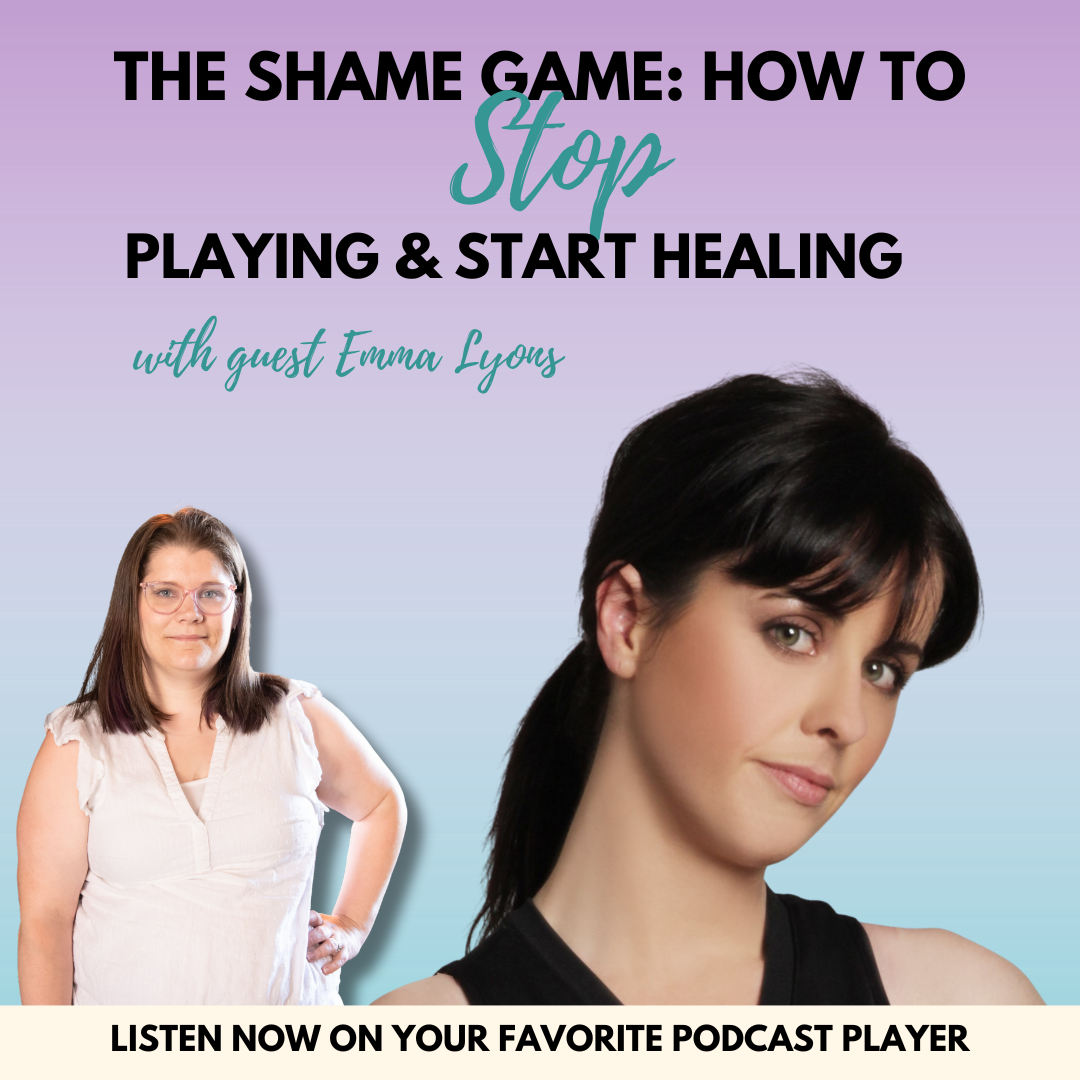
Table of Contents
Introduction and Resource Mention (00:00:00) Emily welcomes listeners, introduces the podcast, and mentions the free "Unlocking Peace" guide.
Guest Introduction: Emma Lyons (00:00:56) Emily introduces guest Emma Lyons, who shares her background and journey from law to healing work.
Emma’s Personal Story and Family Dynamics (00:01:23) Emma discusses her upbringing, covert narcissism, and how internalized shame shaped her life.
How Shame Operates in Society (00:03:11) Emma explains the prevalence of shame in Western culture, its roots, and how it controls behavior.
Shame in Trauma Survivors (00:06:20) Emily and Emma discuss how trauma survivors internalize shame and blame themselves for abuse or neglect.
Breaking the Shame Cycle: The BREAK Method (00:07:18) Emma introduces her BREAK acronym for overcoming shame: Break the trance, Refuse, Expose, Anchor, Kick out.
Actionable Tips for Listeners (00:13:39) Emma shares practical steps: recognize shame as not you, refuse to engage, and break up with the shame voice.
How to Connect with Emma & Free Gift (00:16:26) Emma provides her social media handle and offers a free guide for listeners interested in her work.
Closing and Final Encouragement (00:17:07) Emily thanks Emma, reminds listeners of the free guide, and offers words of encouragement for healing.
Breaking the Cycle of Shame: A Deep Dive into Healing After Trauma
Motherhood After Trauma is a podcast dedicated to supporting mothers on their healing journeys, especially those navigating the complex aftermath of trauma. In a recent episode, host Emily sat down with Emma Lyons, a healing expert who specializes in helping women break free from the grip of internalized shame—particularly the kind rooted in dysfunctional family systems and covert narcissistic abuse.
This blog post unpacks the main themes and actionable strategies from their conversation, offering a comprehensive guide for anyone seeking to reclaim their power from shame. We’ll explore the cultural roots of shame, its impact on trauma survivors, and Emma’s powerful BREAK method for dismantling the internalized shame voice. Each step is broken down with in-depth insights and practical advice, so you can start applying these tools to your own healing journey.
Understanding Shame: The Hidden Force Shaping Our Lives
The Cultural Roots of Shame
Emma Lyons highlights that shame is not just a personal feeling—it’s a pervasive force in Western culture. Rooted in religious and societal narratives (such as the concept of original sin), shame is used as a tool for control and conformity. It’s so normalized that many of us don’t even recognize how deeply it shapes our thoughts, behaviors, and self-worth.
Key Insights:
- Shame as Social Control: From childhood, many are parented with shame—told they are “bad” or “wrong” for making mistakes. This is often unconscious, passed down through generations.
- Internalized Policing: Over time, we internalize these messages, policing ourselves even when no one is watching.
- Gendered Experiences: Women tend to be more aware of shame, while men may compartmentalize or deny it, but both are affected.
Shame in the Context of Trauma
For trauma survivors, shame is especially insidious. When abuse or neglect occurs in childhood, the child’s natural instinct is to blame themselves—believing that if something is wrong, it must be their fault. This is particularly true in families with covert narcissism, where one child is often scapegoated to maintain the family’s dysfunctional equilibrium.
Expert Perspective:
- The Scapegoat Role: In dysfunctional families, the scapegoat absorbs the family’s shame and dysfunction, often becoming the one who seeks therapy and healing later in life.
- The “Inner Narcissist”: Emma describes the internalized shame voice as an “inner narcissist”—a critical, self-sabotaging presence that mimics the voice of a shaming parent or caregiver.
The BREAK Method: A Step-by-Step Guide to Reclaiming Your Power
Traditional approaches to shame often focus on sitting with it, empathizing with it, or trying to integrate it as a wounded part of ourselves. Emma challenges this paradigm, arguing that shame is more like malware—an invasive program that needs to be identified and removed, not befriended.
Her BREAK method offers a clear, actionable framework for doing just that.
1. B – Break the Trance
What It Means:
Recognize that the shame voice is not your authentic self. It’s a trance—a spell cast by years of conditioning, often echoing the words and attitudes of a shaming parent or authority figure.
Action Steps:
- Catch the Voice: Notice when the shame narrative arises. Is it telling you you’re not good enough, that you’re “bad,” or that you’ll never change?
- Name It: Say to yourself, “This is the shame voice. This is not me.”
Expert Insight:
Emma emphasizes that this step is about awareness. The more you can observe the shame voice as something separate from your true self, the less power it has over you.
2. R – Refuse to Engage
What It Means:
Don’t argue with or try to justify yourself to the shame voice. Like dealing with a narcissist in real life, engagement only fuels the dynamic.
Action Steps:
- Drop the Rope: When the shame voice tries to pull you into self-criticism or defense, simply refuse to participate.
- Set Boundaries: Internally, say, “I don’t owe you an explanation. I’m not engaging.”
Expert Insight:
Emma notes that this is a radical shift from traditional therapeutic approaches, which often encourage dialogue with all inner voices. Here, the goal is to starve the shame voice of attention.
3. E – Expose the Lie
What It Means:
Shame thrives in secrecy and confusion. By calling out the shame voice as a lie—a form of control and manipulation—you strip it of its power.
Action Steps:
- Identify the Programming: Ask yourself, “Whose voice is this? Where did I learn this?”
- Speak the Truth: Out loud or in your mind, say, “This is not my story. This is a lie.”
Expert Insight:
Emma encourages clients to see shame as a tool others used to control them, not as a reflection of their true worth or identity.
4. A – Anchor in Your Truth
What It Means:
After disrupting the shame narrative, ground yourself in the present moment and your authentic self.
Action Steps:
- Body Awareness: Feel your breath, your feet on the ground, your physical presence.
- Affirm Your Identity: Say your name, the current year, and remind yourself, “I am safe. I am sovereign.”
Expert Insight:
This step is about re-regulating your nervous system and reclaiming your sense of agency. Trauma disconnects us from our bodies; anchoring brings us back.
5. K – Kick It Out
What It Means:
Physically and energetically evict the shame from your system. This is an act of self-liberation.
Action Steps:
- Movement: Shake your body, stomp your feet, or do any movement that feels like “kicking out” the shame.
- Verbal Rejection: Say, “No. This isn’t mine. Goodbye.”
Expert Insight:
Emma likens the shame voice to a parasite or leech. You don’t need to negotiate with it—just remove it.

Practical Tips for Everyday Healing
Emma’s approach is both compassionate and empowering. Here are two key takeaways you can start using today:
1. Break the Trance—Every Time
- Practice Mindful Awareness: Each time you notice the shame voice, pause and name it. The more you do this, the weaker its hold becomes.
- Remember: It’s Not You: The shame voice is a survival mechanism, not your true self. Treat it like spam email—recognize it, and don’t engage.
2. Just Say No
- No Sympathy for Shame: You don’t have to feel sorry for the shame voice or try to understand it. Its only goal is to keep you small.
- Simple Rejection: A calm, firm “No” is enough. You don’t need to get angry unless that feels empowering for you.
Bonus Insight:
We’re often taught that shaming ourselves will protect us from others’ criticism. In reality, it only deepens the wound. Breaking up with shame is an act of self-respect and liberation.
Expert Recommendations and Resources
- Emma’s Free Guide: “Five Signs It’s Time to Break Up with Your Inner Narcissist” is available here.
- Unlocking Peace Guide: Emily’s free resource for managing triggers and reclaiming calm is here.
Final Thoughts: You Are Not Alone
Healing from trauma and shame is a journey, not a destination. Emma’s BREAK method offers a practical, step-by-step approach to reclaiming your power and rewriting your story. Remember, you are not alone in this work. By breaking the cycle of shame, you’re not just healing yourself—you’re creating a new legacy for your children and future generations.
Ready to start?
Download the free guides, connect with Emma and Emily, and take your first step toward a life free from the grip of shame.
If this post resonated with you, share it with a friend or fellow mama who might need these tools. Healing is possible, and you deserve peace.
About Emma Lyons

Emma Lyons is a trauma-informed healer and founder of The Trauma Matrix, where she helps women break up with the shame voice that’s been sabotaging their success, relationships, and visibility for years.
After studying law and international human rights, Emma turned away from a life path that looked good on paper but felt like slow death — and spent the next decade deep in the healing world. Despite all the therapy, yoga, mindset work, and energy practices, she still found herself stuck in loops of self-erasure, burnout, and invisibility… until she uncovered the deeper truth: she’d internalized a narcissistic system of control, and it was running her from the inside out.
Today, Emma helps high-functioning, heart-led women dismantle that inner narcissist, the shame voice that humiliates, controls, and impersonates them, so they can reclaim clarity, power, and nervous system freedom.
Want to be a guest on Mamahood After Trauma? Send Emily Cleghorn a message on PodMatch, here